How I Organized a Busy Family Cabin Pantry
When you're organizing your own kitchen, you know where everything belongs because, well, you put it there.
A family cabin is a different story.
Background
My parents built a cabin in the 2010s for our growing family. They’ve spent about half the year at the cabin and the other half in a warmer climate. My mom died in April, so navigating this summer is a new adventure for us. It was always her kitchen, so it was set up for her preferences and the way she cooked and baked in it.
My dad still lives there, so first and foremost, it’s his home.
However, there are now several people who regularly cook at the cabin, in addition to dad who is just living life and adjusting to not having his regular chef of 54 years around providing delicious meals and treats.
Many Cooks, One Pantry
There are at least six of us who cook here somewhat regularly, so the pantry and kitchen need to work for all of us.
Since I’m the resident pro organizer, I decided to start making some small changes to organize the kitchen that would make it easier for us to see and use what’s available and put things away.
Typically for a pantry organizing project, I would empty out the entire pantry, categorize the food, and start fresh with a deep-cleaned space, but I worked on this project in fits and starts over a few weekend visits.
The Assessment
When I’m working with an organizing client, I ask questions to find out where the main pain points lie.
In this pantry, I identified the following problems:
We didn’t know what food items were available.
Food was expiring because it was hidden.
Duplicate items clogged up the best real estate.
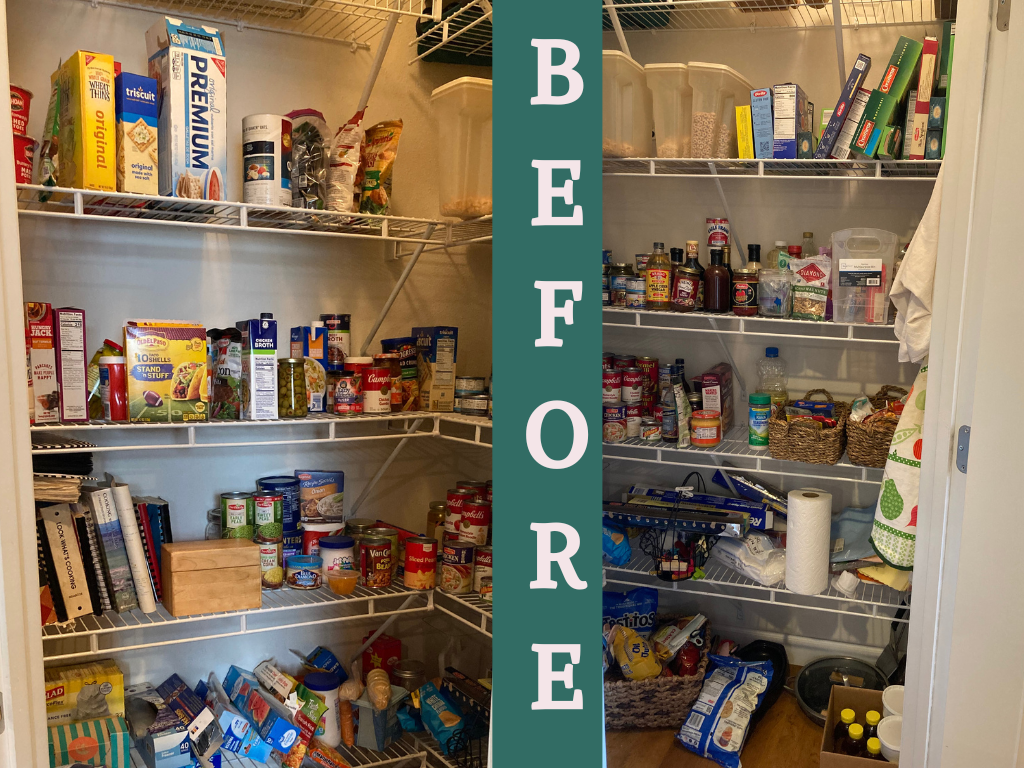
It was functioning, but barely.
Decluttering
I started by removing expired foods or things that I knew we wouldn’t use now that mom was no longer cooking.
An added challenge is that we’re about 20 minutes from the closest small-town grocery store so if you're planning to cook you can’t just pop over and grab something you forgot. We ended up having lots of duplicates of things like chicken broth and apple cider vinegar.
It made sense to keep some duplicates, as we use plenty of barbecue sauce and pasta, but not that many cans of green chiles or pie filling.
Categorize
While I was checking dates, I loosely categorized similar items together.
Categories included:
Crackers
Breakfast/cereal
Pasta
Sauces
Soups
Baking/sweets
Nuts
Chips
Recipes
Paper products
Creating Zones That Make Sense
A shared space needs to be intuitive enough that people who didn't create the system can still use it.
Since dad is still living here, it made sense to keep the things he’ll use as close to where they have always been as possible. We can’t have grandpa searching too hard for his Wheaties!
The zones came naturally during the sorting. For pantry organizing, I like to sort by function, rather than container. Not all canned goods are created equal, so it doesn’t make sense to keep the tomato soup with diced green chiles or canned peaches just because they’re the same shape.
Grouping savory items, breakfast foods, and baking supplies together just makes sense when you’re starting to cook or bake.
Contain
The closest Walmart is about 45 miles away, in the town where my sister lives. So I picked up a few of these, these, and one of these to use as I put the pantry back together. I got these labels from Amazon.
I love using these Mainstays pantry containers because they are clear enough to see what’s inside without the overwhelming visual clutter of perfectly clear, they are affordable, and they don’t waste space by having angled sides (a common professional organizer pet peeve).
I determined which items ended up in bins by how things fit on the wire shelves, which categories had the most items, and my own personal preferences as Pantry Boss.
Sauces went in the shallow open bin simply because they can leak and get sticky and it’s easier to clean a container than everything placed below it on the shelves.
Other items in bins included soups, baking items, sweets, pasta, and rice.
I used containers we already had to corral chips, chip clips, packets, and napkins.
Designing for Multiple Cooks
Because a shared space needs to be intuitive enough that people who didn't create the system can still use it, I kept the categories’ locations as close to where mom had them as possible. Humans are creatures of habit so we’d look in the general vicinity that the chocolate chips have been in for 15 years next time we need them!
Organizing a family cabin is different from organizing for one household but multiple people need to be able to effectively use and maintain the space.
A good shared system needs to be:
Obvious. People shouldn't need an explanation every time.
Accessible. Frequently used things shouldn't be hidden.
Flexible. It needs to survive different people's habits.
Easy to reset. No one wants to reorganize the pantry every weekend. Even me.
Easy to see. If people can't see it, they'll assume we don't have it.
Labeled. There are 20 of us here some weekends, so labels are a must.
The Finished Pantry
I was going for functionality over Pinterest-perfect. These pics will not go viral! Also, photographing a corner pantry is surprisingly difficult.
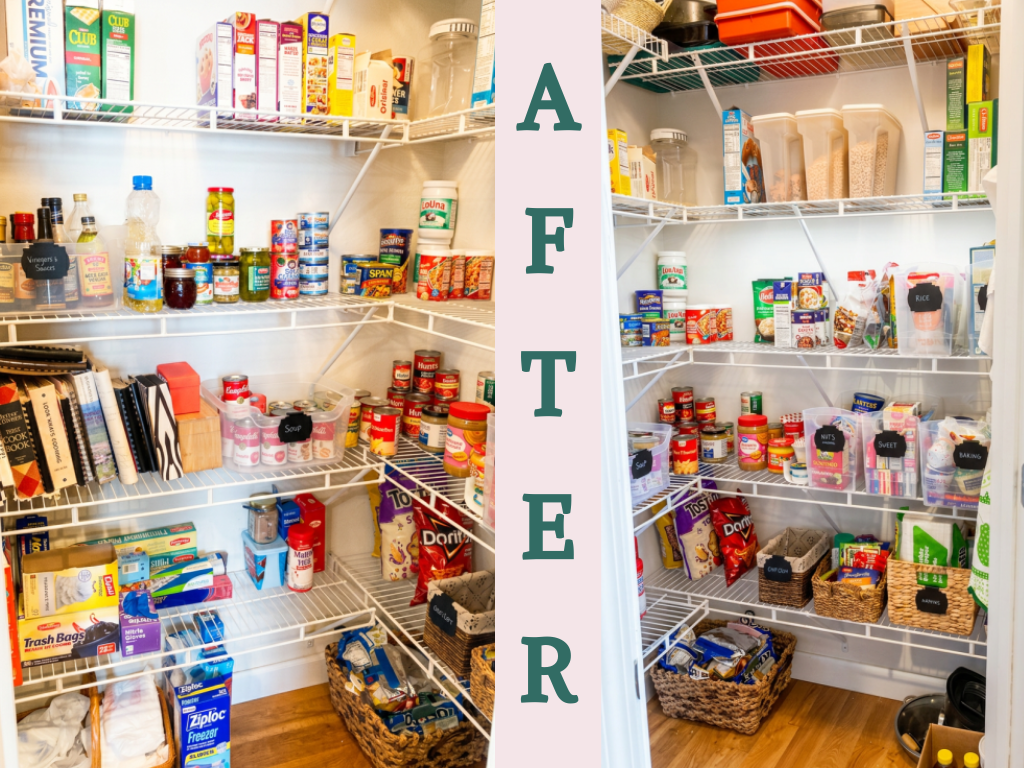
It won’t get me featured in Better Homes and Gardens, but it’s an improvement for sure!
Dad noticed how much less overwhelming the pantry feels, and is easily able to find his morning cereal and other regularly-used foods.
We no longer have way too much food that we’ll never use. It’s clear to anyone who walks in that we have plenty of chicken broth and that they should bring Doritos next time they come (always with the chips, man).
I labeled the containers, but resisted the urge to over label everything, as that can often be asking for a headache. While we’ll always have crackers and pasta, the inventory will constantly change with different people bringing groceries in and cooking. That’s ok; this is a pantry for a family that loves to eat!
What I Learned From Organizing This Pantry
My family didn’t fawn over my progress as I’d hoped they would, but we’ve been cooking and eating without having to constantly ask “do we have any…” or sending a teenager into town for a forgotten item, so I’m considering it a win.
A good organizing system isn't about making everything look picture-perfect. It's about making the space work for the people who use it. And when the people who use it number in the double digits, intuitive organizing is a must.
The best system is one that is adaptable and easy to maintain. I know I’ll have to tidy the pantry often to keep it up, but five minutes here and there on the weekend beats a total overhaul when I’d rather be out in the sun.
Organizing for real families and real life means letting go of perfection and choosing accessibility. Whether it's a family cabin, a busy family kitchen, or a business storage room, the goal of organizing isn't simply to make things look better. It's to make life easier for the people using the space.
If your pantry, kitchen, garage, office, or cabin has become a “we'll deal with that someday” space, that's exactly the kind of project I love.

Hi! I’m Ashley and I own Good Help Organizing.
Good Help Organizing helps families in North Dakota create systems that work for real life.